

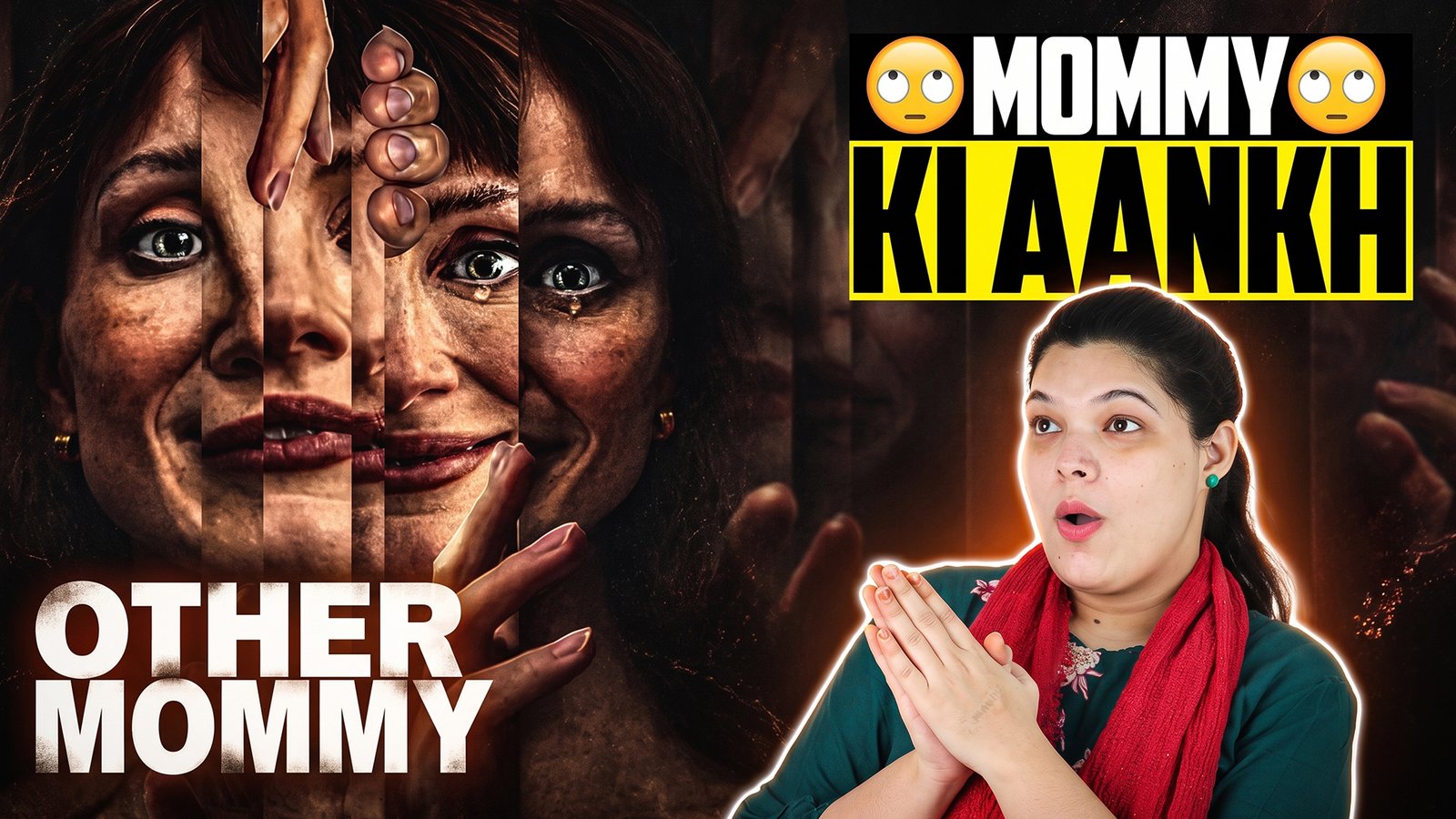
Other Mommy Movie Review: When Your Worst Nightmare Wears Your Mother’s Face
Imagine sitting in a warm bathroom, laughing while your mom covers her face with soap bubbles to make you giggle. You blink, and suddenly your real mother knocks on the door from the hallway, asking if you are ready to get out.
Who has been sitting in front of you the entire time?
That sickening drop in your stomach is the exact premise behind the new supernatural horror flick, Other Mommy. Directed under the joint creative gravity of modern horror titans James Wan and Blumhouse Productions, the film taps directly into Capgras delusion—the psychological terror that someone you love has been replaced by an impostor—and turns it into an aggressive, spine-chilling haunting.
In this comprehensive Other Mommy movie review, we break down the plot, the scares, the psychological depth, and whether this theatrical release deserves your weekend ticket.
The Plot: An Imaginary Friend or a Demonic Mimic?
The narrative centers on young Bella and her parents, an ordinary family thrown into an extraordinary, waking nightmare.
The story opens with quiet domesticity:
Bella is playing in the bathtub with who she believes is her mother.
Her mother paints a thick mask of soap suds over her face to amuse her.
Just then, her actual mother walks down the hall, calling out that bath time is over.
The figure in the tub distorts into something unnatural, vanishing before an adult can witness it.
From that moment on, Bella insists that a woman who looks identical to her mother lives inside their home. She calls this entity the “Other Mommy.” Naturally, her parents brush it off at first. Every parent deals with imaginary play, childhood stress, or vivid dreams. But when the entity stops hiding in the shadows and starts pulling Bella out of physical reality, denial is no longer an option.
Standout Sequences: Re-Engineering Childhood Spaces into Pure Dread
Modern horror often relies too heavily on dark basements and abandoned attics. Other Mommy succeeds because it infects brightly lit, innocent spaces where children are supposed to feel protected.
1. The Ball Pit Abduction
Perhaps the most claustrophobic set piece in the film takes place in a crowded family entertainment center. Bella jumps into a colorful, multi-level ball pit. Out of nowhere, an unseen force drags her beneath the plastic spheres.
Her father races across the padded floor, diving through hundreds of plastic balls while Bella screams for help. The tension is suffocating. By the time he reaches the bottom, she is gone, pulled into an inverted, shadow-drenched version of their world.
2. The Unnatural Movement
The entity does not glide like a classic ghost; it twists. Taking visual cues from classic Asian horror and Wan’s signature visceral physical effects, the “Other Mommy” scales walls like an arachnid, hovers inches above the floorboards, and whispers directly into Bella’s ears with a voice that mirrors her mother’s tone down to the syllable.
What Works: Strengths of the Film
A great horror film needs more than cheap audio stingers to stick with you after the credits roll. Here is where the production shines:
Relatable Family Dynamics: The movie takes time to establish the bond between Bella and her mother. When an entity steals the face of the person you rely on for safety, the violation feels deeply personal.
Grounded Practical Effects: While CGI is used to distort limbs and create surreal environments, the entity relies heavily on physical contortionists and practical makeup, giving the encounters a tangible, gritty texture.
Smart Pacing: The runtime does not waste 40 minutes on polite dinner conversations. Once the uncanny nature of the duplicate is revealed, the momentum builds steadily toward an intense third act.
Sound Design: The auditory cues—dripping bathwater, clicking joints, and the eerie, slightly out-of-sync mimicry of domestic phrases—keep you on edge even when the screen is quiet.

What Could Be Better: Areas That Fall Flat
No horror film is without flaws, and this one leans on a few well-worn tropes that genre veterans will spot instantly.
Familiar “Skeptical Parent” Syndrome: The father takes entirely too long to realize that something beyond a vivid imagination is harming his daughter. While realistic in real life, in a horror script, it occasionally tests the viewer’s patience.
Lore Ambiguity: The movie drops hints about where the creature came from and why it targets this specific family, but it never fully commits to an origin story. Some viewers might enjoy the mystery, but those who prefer clear mythologies might find the resolution abrupt.
How Does It Compare to Other Doppelgänger Horrors?
| Feature | Other Mommy | Coraline | Us |
| Primary Theme | Demonic impersonation & childhood terror | Dark fantasy & manipulative maternal figures | Class disparity & systemic doppelgängers |
| Tone | Relentless, jump-heavy supernatural horror | Whimsical yet gothic stop-motion | Sociopolitical psychological thriller |
| Main Threat | Face-stealing entity breaking into the physical home | The Beldam luring children behind a small door | The Tethered rising from underground tunnels |
| Best For | Fans of Wan-style hauntings | Families and animation lovers | Fans of layered, metaphorical horror |
Behind the Scenes: The Wan and Blumhouse Touch
When you see the names James Wan and Blumhouse attached to a project, expectations run high. Wan brings kinetic camera movements, spinning angles, and dread-soaked hallways reminiscent of The Conjuring and Insidious. Blumhouse grounds the film with sharp, economical storytelling that maximizes suspense without unnecessary bloat.
The direction gives the entity a distinct personality: predatory, mocking, and disturbingly patient. It treats the family home not just as a location to haunt, but as a hunting ground where it methodically separates the child from her protectors.
The Final Verdict
Other Mommy delivers an effective, high-energy ride that takes everyday parental anxieties and blows them up into full-blown supernatural panic. It might not reinvent the wheel of demonic possession or mimic cinema, but its set pieces—especially the bathtub opening and the ball pit sequence—make it a memorable addition to modern creature features.
If you enjoy fast-paced ghost stories, psychological doubles, and jump scares that actually hit their mark, this one belongs on your watchlist.
Our Rating: 3.8 / 5 Stars
Frequently Asked Questions (FAQ)
What is the movie Other Mommy about?
Other Mommy follows a young girl named Bella who begins seeing an identical, malevolent double of her mother inside their house. While her parents initially dismiss it as an imaginary friend, the creature begins dragging Bella into an alternate realm, forcing the real mother to fight to save her daughter.
Who produced Other Mommy?
The movie is produced under the collaborative creative banner associated with James Wan and Blumhouse Productions, known for modern horror franchises like The Conjuring, Insidious, and M3GAN.
Is Other Mommy based on Neil Gaiman’s Coraline?
While the title and concept of a sinister duplicate mother share obvious thematic parallels with Neil Gaiman’s Coraline (specifically the “Other Mother”), Other Mommy is a live-action, R-rated supernatural horror film aimed at older audiences, featuring demonic mimicry and physical body horror rather than a stop-motion dark fairy tale.
Is Other Mommy safe for younger kids to watch?
No. Despite featuring a young child as the protagonist and scenes set in play areas, the movie features intense psychological distress, disturbing creature designs, contortionism, and violent supernatural abductions that are inappropriate for young children.