

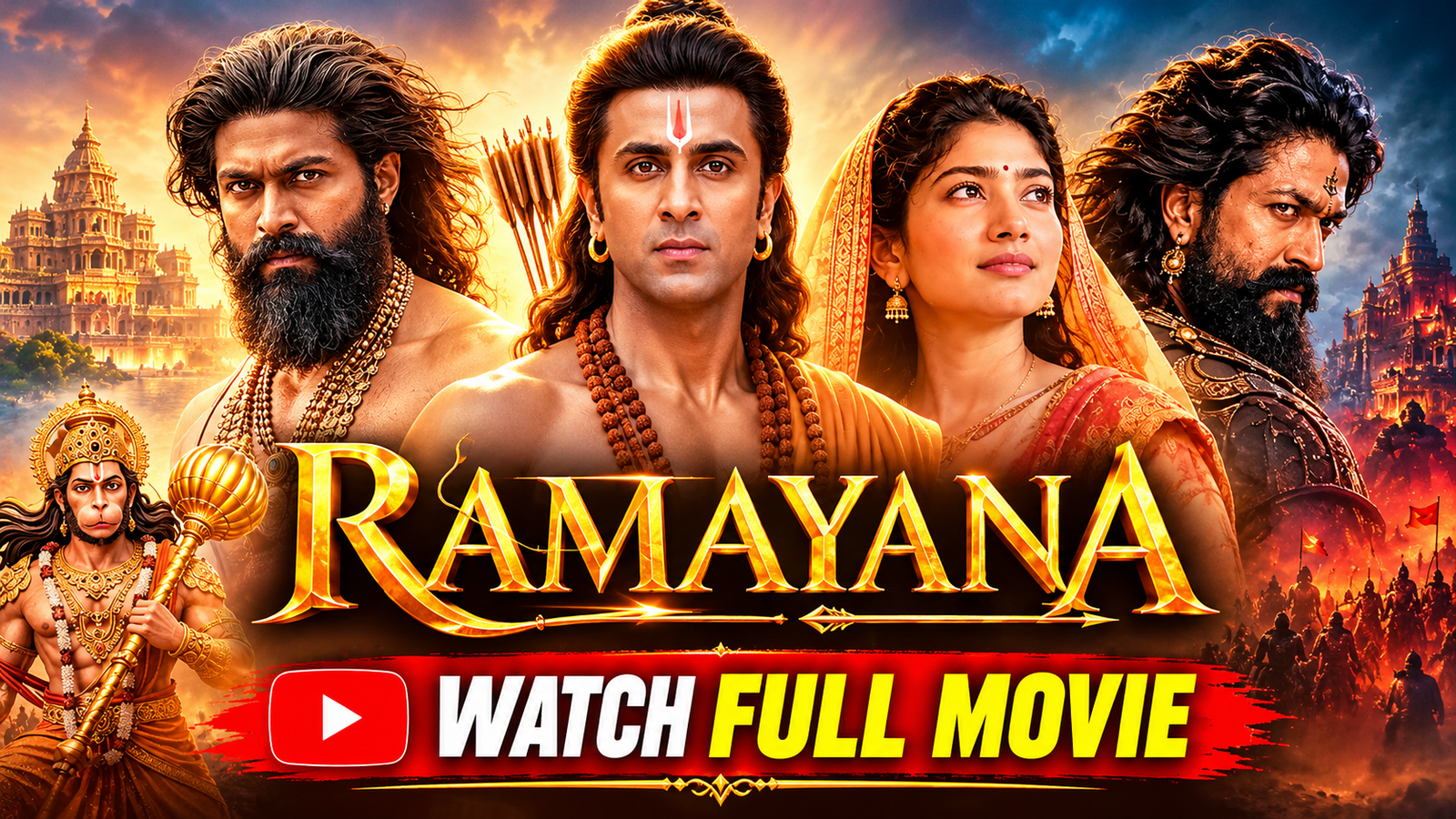
Ramayana Full Movie: Complete Guide to the Epic 3-Part Cinematic Trilogy
Have you ever tried to tell the entire story of the Ramayana in a single evening? It is practically impossible.
The ancient Indian epic is vast. It spans hundreds of chapters, countless moral dilemmas, intricate family bonds, and world-shaking battles. Whenever filmmakers attempt to squeeze this mammoth journey into a standard two-hour film, critical elements get lost. Crucial character motivations disappear. Subplots vanish.
That is why the announcement of a massive, big-budget three-part cinematic adaptation has captured everyone’s attention. Instead of rushing through centuries of tradition, this ambitious project divides the story into a grand trilogy. Each installment gives the characters, philosophies, and visual spectacles the breathing room they truly deserve.
Whether you are eager to watch the Ramayana full movie experience from start to finish, understand how the narrative is split, or find out where to catch each chapter safely and legally, this comprehensive guide covers everything you need to know.
Ramayana Part – 1
Ramayana Part – 2
Ramayana Part – 3
Why a Three-Part Format Makes Perfect Sense
The Ramayana is divided traditionally into seven distinct books, known as Kandas. Trying to pack the childhood of Rama, his exile, the abduction of Sita, the alliance with Sugriva, and the colossal war against Ravana into one sitting usually results in pacing issues.
Splitting the epic into three focused feature films solves several critical problems:
Authentic Character Development: Viewers get to understand Ravana’s formidable intellect alongside his hubris, rather than seeing him simply as a one-dimensional villain.
Emotional Depth: Rama’s devotion to duty (Dharma) and Sita’s profound resilience receive dedicated screen time.
Visual Excellence: Modern VFX teams have the space to build believable ancient kingdoms like Ayodhya, Kishkindha, and Lanka without rushing between sets.
Pacing That Respects Tradition: Important emotional turning points—such as the building of the Ram Setu—become central cinematic set pieces rather than quick montages.
The Trilogy Breakdown: What Happens in Each Part?
Understanding how the narrative unfolds helps set clear expectations before you settle down to watch.
       ┌─────────────────────────────┐
       │     Ramayana Movie Saga     │
       └──────────────┬──────────────┘
                      │
     ┌────────────────┼────────────────┐
     ▼                ▼                ▼
┌─────────┐      ┌─────────┐      ┌─────────┐
│ Part 1  │      │ Part 2  │      │ Part 3  │
│  Exile  │      │ Search  │      │   War   │
└─────────┘      └─────────┘      └─────────┘
Part 1: The Foundations of Duty and the Golden Deer
The first chapter grounds the audience in Ayodhya’s regal splendor and establishes the core family dynamics.
Childhood and Education: The early upbringing of Rama, Lakshmana, Bharata, and Shatrughna under sage Vashistha.
Sita Swayamvara: Rama stringing the celestial bow of Lord Shiva, leading to his union with Sita.
The Exile (Vanvaas): Kaikeyi’s fateful boons to King Dasharatha, culminating in Rama’s peaceful acceptance of a fourteen-year forest exile accompanied by Sita and Lakshmana.
Panchavati and the Abduction: Life in the forest, the confrontation with Surpanakha, and the tragic sequence involving Maricha’s golden deer that allows Ravana to carry Sita away to Lanka.
Part 1 concludes on an intense, emotional cliffhanger: Rama standing in the silent clearing of Panchavati, discovering Sita is gone, and vowing to cross heaven and earth to bring her home.
Part 2: Forest Allies, Devotion, and the Great Search
The second installment shifts tone entirely, transforming into a sweeping adventure and discovery narrative across southern forests and rocky terrains.
Meeting Sugriva and Vali: Rama aids Sugriva in reclaiming his rightful place in Kishkindha, earning the fierce loyalty of the Vanara army.
The Bond with Hanuman: The initial meeting between Rama and Hanuman, which remains one of Indian literature’s most revered portraits of selfless loyalty.
The Leap to Lanka: Hanuman’s perilous journey across the ocean, his infiltration of the golden fortress of Lanka, and his delivery of Rama’s signet ring to an imprisoned Sita in the Ashoka Vatika.
Building the Ram Setu: The engineering marvel where floating stones create a land bridge between the mainland and Lanka.
This chapter bridges the quiet personal tragedy of the opening film with the overwhelming scale of the finale.
Part 3: The War of Dharma and the Return to Ayodhya
The concluding chapter delivers the legendary confrontation between the forces of righteousness and the army of Lanka.
Diplomacy First: Angada’s final peace mission to Ravana’s court, illustrating that conflict was embraced only as a last resort.
The Battle for Lanka: Intense tactical warfare, featuring the defeat of titans like Kumbhakarna and the powerful warrior Indrajit.
The Final Confrontation: The epic multi-day duel between Rama and Ravana, demonstrating the victory of ethical duty over uncontrolled ego.
Coronation (Pattabhishekam): The triumphant return of Rama, Sita, and Lakshmana to Ayodhya aboard the Pushpaka Vimana, marking the dawn of justice and celebration.
Where and How to Watch the Ramayana Full Movie Legally
High-profile mythological films frequently face issues with unauthorized uploads, fake streaming links, and misleading clips online. Watching films through verified channels protects your personal devices from malware and directly supports the creators who spent years researching and producing these works.
Official Theatrical Runs
Nothing matches the visual impact of witnessing the architecture of ancient Lanka and the visual effects of the Vanara army on an IMAX or premium large-format screen. The initial window for each installment always begins exclusively in cinemas worldwide.
Licensed OTT Streaming Platforms
Following their standard theatrical run, big-budget mythological trilogies typically land on major global streaming services. The primary platforms to monitor include:
Amazon Prime Video: Widely known for acquiring streaming rights for major pan-Indian productions across Hindi, Tamil, Telugu, Malayalam, and Kannada.
Netflix: Frequently hosts multi-language releases with high-definition Dolby Atmos sound mixes and comprehensive international subtitle tracks.
JioCinema / Disney+ Hotstar: Major domestic contenders that often secure digital premiere windows for prominent heritage and mythological releases.
Always look for official platform announcements and verified trailers on YouTube to confirm exact streaming drop dates.
Best Practices for a Better Viewing Experience
If you plan to organize a home viewing marathon once the films arrive on digital platforms, keep these simple tips in mind:
Watch in Chronological Order: Do not jump straight to the action scenes in Part 3. The emotional payoff of the final battle relies heavily on the quieter character moments established in Part 1.
Use Original Audio with Subtitles: Even if you rely on subtitles, the original voice performances capture cultural inflections and Sanskrit-derived terminology with far greater emotional authenticity than dubbed tracks.
Calibrate Your Display: Epic period pieces use rich color palettes, from vibrant forest canopies to dark, fiery battlegrounds. Setting your TV to a warm, cinematic picture profile helps you catch subtle set details and lighting choices.
Frequently Asked Questions
Can I watch the Ramayana full movie in a single sitting?
Once all three parts are released theatrically and transition to streaming platforms, you can watch them consecutively. However, because each installment is designed as a standalone, feature-length film running roughly two and a half to three hours, a complete marathon will take approximately eight to nine hours.
In what languages is the trilogy being released?
Major contemporary adaptations of the epic are produced with a pan-Indian and international audience in mind. The project is primarily filmed in Hindi and dubbed into extensive regional languages, including Tamil, Telugu, Kannada, and Malayalam, alongside international subtitled releases.
How closely does the movie stick to the original Valmiki Ramayana?
Most modern adaptations reference the foundational Valmiki Ramayana while incorporating beloved cultural traditions and emotional nuances popularized by Tulsidas’s Ramcharitmanas. The three-part structure specifically allows the filmmakers to stay much closer to traditional texts than shorter single-film versions ever could.
The story of the Ramayana has endured for millennia not simply because of its grand battles, but because its reflections on honor, sacrifice, and family speak to every generation. By dividing the epic into three thoughtful, well-crafted chapters, contemporary cinema ensures that viewers can experience the full weight and beauty of this timeless journey in the comfort and clarity it deserves.