

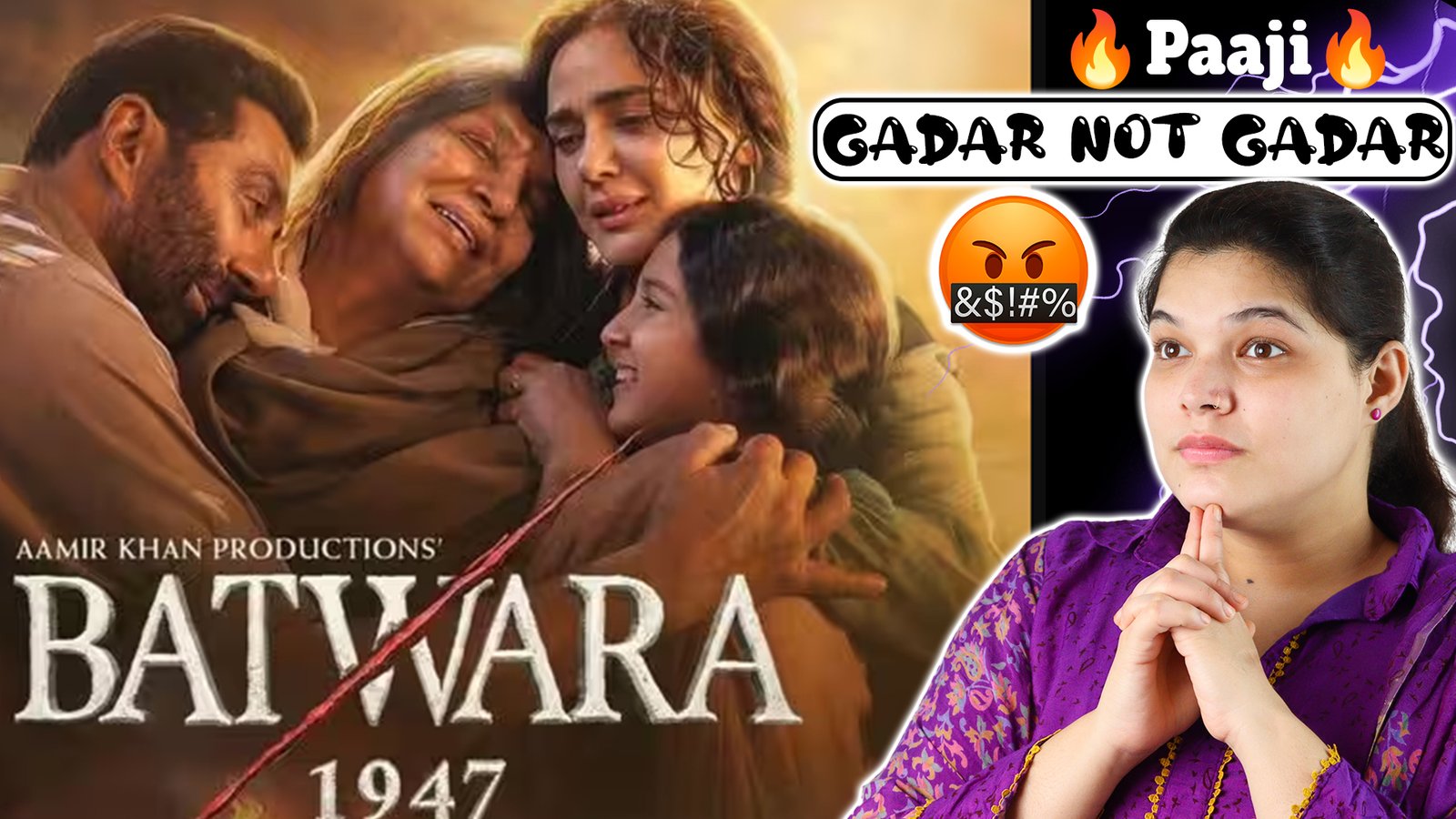
Batwara Movie Review: Does Sunny Deol’s Partition Drama Deliver on Its High Expectations?
Can the classic high-decibel formula driven by Sunny Deol carry a massive box-office run every single time? Following the historic resurgence of patriotic, nostalgic cinema with Gadar 2, filmmakers have frequently turned to high-stakes India–Pakistan backdrops to draw audiences back into theaters. However, does Batwara capture that same raw emotional resonance, or is it an outdated formula dressed in historical packaging? Here is an unfiltered, in-depth Batwara Movie Review breaking down the plot, performances, music, and technical execution to help you decide whether it deserves your weekend ticket.
Plot Overview: The Core Premise of the 1947 Partition
The narrative of Batwara is set against the turbulent backdrop of the 1947 Partition of India, heavily drawing inspiration from Asghar Wajahat’s renowned play, Jis Lahore Nai Dekhya O Jamyai Nai.
The Setting: The story centers on a sprawling ancestral haveli located in Lahore.
The Conflict: Prior to partition, the home belongs to an elderly Hindu matriarch, portrayed by Shabana Azmi. When the partition forces mass migration, the property is officially allotted to a displaced Muslim refugee family led by Sunny Deol’s character.
The Narrative Arc: After establishing the historical turmoil within the first fifteen minutes, the film confines its focus almost entirely to the interior of this single household, examining the ideological friction, shared trauma, and evolving human connections between the unexpected occupants.
The foundational premise remains strong—exploring communal coexistence and shared grief through the microcosm of a single home carries inherent narrative power. However, the realization of this premise struggles under the weight of uneven pacing and tonal inconsistencies.
Cast Performances: Who Delivers and Who Falls Flat?
The film features an ensemble cast spanning multiple generations, yet the effectiveness of their performances varies widely across the screen.
1. Shabana Azmi: The Emotional Anchor
Shabana Azmi provides the film’s strongest asset. Given substantial screen time, her portrayal of a woman refusing to abandon her roots is textured, dignified, and emotionally raw. Her expressive nuance and controlled dialogue delivery lend credibility to scenes that would otherwise feel overly melodramatic.
2. Sunny Deol: Caught in a Familiar Trope
Sunny Deol delivers sincere emotional beats during key confrontations, particularly in the climax. However, his performance frequently struggles with character authenticity:
His body language and high-energy dialogue delivery often resemble modern action archetypes rather than an authentic period-appropriate patriarch from 1947.
While supporting actors adopt subtle Urdu-influenced manners and traditional attire, Deol’s performance leans heavily into his trademark loud persona, creating a jarring stylistic contrast.
3. Karan Deol: Needs Formal Refinement
Karan Deol’s screen presence remains underdeveloped. His performance lacks the vocal projection and emotional nuance required for a heavy period drama, leaving his character feeling heavily reliant on the presence of senior actors rather than standing out organically.
4. Abhimanyu Singh: Dialect Inconsistencies
Abhimanyu Singh is generally a reliable performer, but his work here is hindered by awkward linguistic execution. The dialogue delivery shifts unevenly between Punjabi, formal Urdu, and modern Hindi, making lines sound rehearsed rather than naturally spoken.
Directorial Execution and Technical Flaws
For a period drama to succeed, historical immersion and atmospheric authenticity are critical. Batwara falters in several core production aspects:
Heavy-Handed Exposition: While the emotional climax seeks to promote unity and brotherhood, the moral messaging is delivered with excessive didacticism, undermining genuine dramatic tension.
Underwhelming Musical Score: Despite being credited to legendary composer A.R. Rahman, the soundtrack lacks memorable melodies or impactful background pieces, failing to elevate key emotional scenes.
Uneven Pacing: The midsection drags considerably inside the haveli, lingering on repetitive arguments without meaningfully progressing the character arcs.
Theatrical Release Misstep: Facing steep box-office competition from high-budget commercial releases, a niche period drama requires extraordinary technical execution and sharp word-of-mouth to fill theaters—both of which are lacking here.
Pros and Cons Breakdown
| Highlights (Pros) | Drawbacks (Cons) |
| Family-Friendly: Clean presentation suitable for multi-generational viewing. | Inconsistent Dialects: Awkward dialogue delivery across several supporting roles. |
| Shabana Azmi’s Acting: A masterclass in subtle, poignant character work. | Pacing Issues: Sluggish narrative progression during the second act. |
| Strong Basic Concept: An earnest exploration of partition-era grief. | Predictable Resolution: Heavy-handed messaging reduces organic impact. |
Final Verdict & Rating
Batwara starts with noble intentions and a powerful classical premise, but it is held back by theatrical over-exaggeration, uneven performances, and uninspired technical direction. While senior audiences and fans of traditional family dramas may appreciate Shabana Azmi’s stellar performance, general theatergoers may prefer waiting for its digital streaming release.
Final Rating: 3.5 / 5 Stars
Frequently Asked Questions (FAQs)
Q1: Is the movie Batwara based on a true historical event?
The film is a fictionalized drama set against the real historical backdrop of the 1947 Partition of India, adapting themes from celebrated literary works and period plays depicting refugee property transfers.
Q2: Is Batwara suitable for family viewing?
Yes, the film is completely family-friendly. It avoids graphic violence and vulgar language, focusing strictly on social, historical, and emotional drama.
Q3: How is the musical score of the film?
Despite the involvement of celebrated composers, the film’s soundtrack is understated and lacks standalone chartbusters, serving primarily as functional background support.